
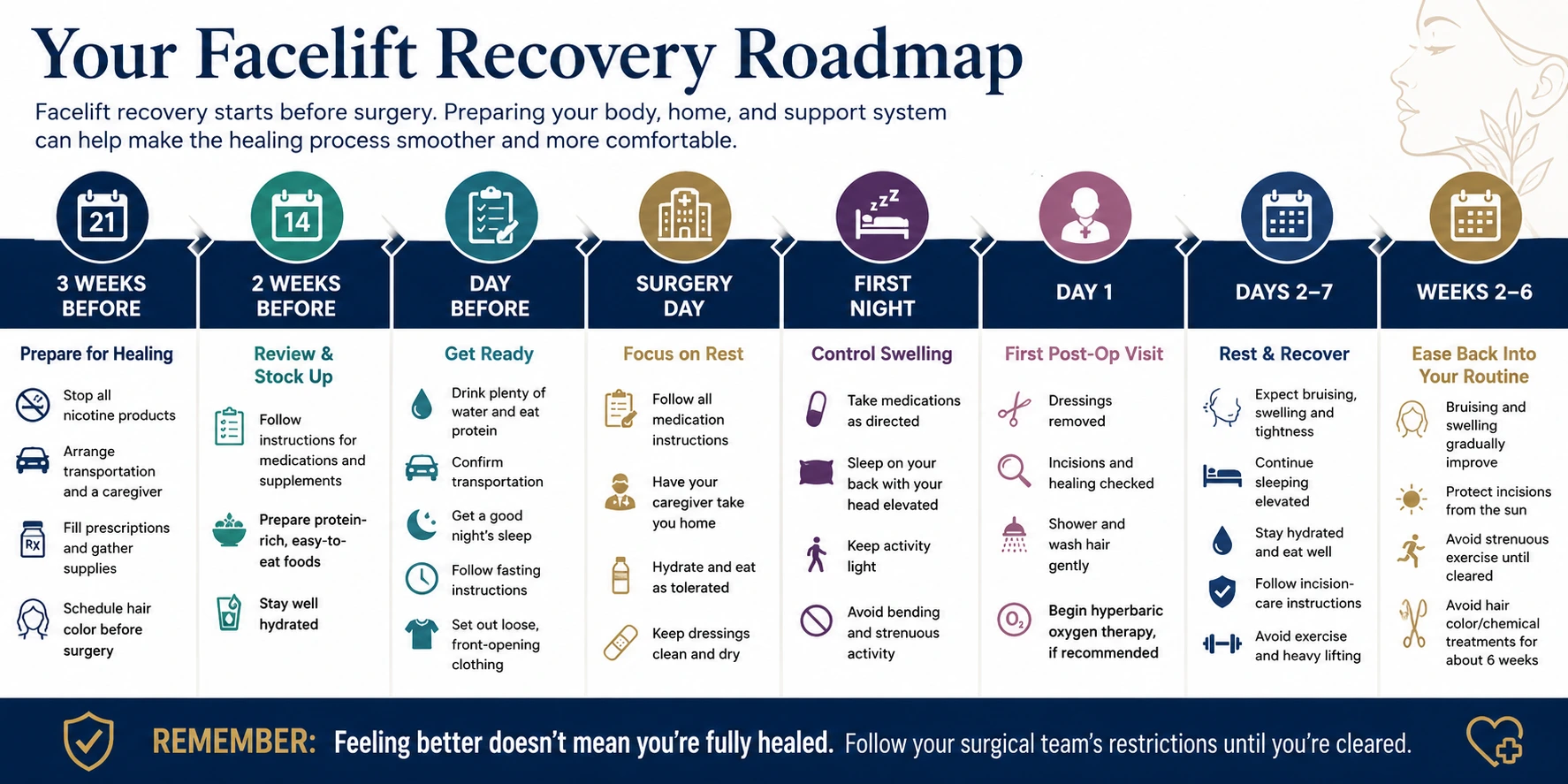
One of the most common questions patients ask before facelift surgery is, “What will recovery be like?”
A facelift recovery timeline can help you understand the rhythm of healing, from the preparation you complete before surgery to the swelling, bruising, rest, and follow-up care that happen afterward.
While every patient heals at a slightly different pace, understanding what to expect before and after surgery can help you feel more confident and prepared. Whether your plan includes a facelift alone or a combination of facelift procedure options, brow lift, eyelid surgery, neck lift, or skin resurfacing, your post-operative instructions are one of the most important parts of a safe and supported recovery.
This day-by-day facelift recovery guide outlines the general timeline many facial rejuvenation patients can expect. Your exact instructions may differ based on your procedure, anatomy, health history, medications, and how your body heals.
Why Facelift Recovery Starts Before Surgery
Recovery actually begins before your procedure.
The choices you make in the weeks leading up to surgery can influence swelling, bruising, comfort, and the way your incisions heal. This is the time to protect your body, prepare your home, and make sure you have the right support in place before surgery day arrives.Recovery actually begins before your procedure.
The choices you make in the weeks leading up to surgery can influence swelling, bruising, comfort, and the way your incisions heal. This is the time to protect your body, prepare your home, and make sure you have the right support in place before surgery day arrives.
Three Weeks Before Surgery: Stop Nicotine and Plan Support
To promote proper healing and reduce the risk of complications, all nicotine products must be stopped at least three weeks before surgery. This includes cigarettes, vaping, nicotine gum, patches, and smokeless tobacco products.
Nicotine can interfere with blood flow, which is why stopping all nicotine products is treated as an important safety step. During this same period, start building a recovery plan that reduces stress after surgery.
During this time, begin planning for recovery by:
- Arranging transportation to and from surgery
- Identifying an adult caregiver who can stay with you after surgery
- Filling all prescribed medications
- Purchasing recovery supplies
- Scheduling hair appointments before surgery, as hair coloring should be avoided for approximately six weeks afterward
It can also help to set up a comfortable recovery area with pillows, water, light snacks, phone chargers, entertainment, and any supplies your surgical team recommends.
Two Weeks Before Surgery: Review Medications and Stock Your Kitchen
Certain medications and supplements may need to be discontinued before surgery.
Dr. Winslow will provide a complete list of medications to avoid, which commonly includes:
- Ibuprofen and other NSAIDs
- Certain supplements that can increase bleeding risk
- Additional medications that have not been approved by your surgical team
Tylenol is generally permitted, but always follow your individualized instructions. If you are unsure about a medication, supplement, or over-the-counter product, ask before taking it. The pre-operative instructions you receive from the office should guide your preparation. Many patients also begin preparing nutritious meals and stocking their homes with recovery-friendly foods and hydration options.
Choose foods that are easy to eat, gentle on your stomach, and rich in protein. Hydration and nutrition support your body while it is using energy to heal.
The Day Before Surgery: Keep It Simple
The day before surgery is all about preparation.
Patients should:
- Drink plenty of water
- Increase protein intake
- Get a full night’s rest
- Confirm transportation arrangements
- Review medication instructions
- Stop eating and drinking at midnight or at least eight hours before surgery
Being well-rested and hydrated can help support a smoother recovery.
This is also a good time to place loose, button-front or zip-front clothing nearby so you do not need to pull anything over your head after surgery.
Surgery Day and the First Evening at Home
The first 24 hours are focused on monitoring, comfort, hydration, and swelling control. You should not drive yourself home, and your caregiver should be available to help you follow instructions once you are discharged.
Surgery Day: What Happens Before You Go Home
On the morning of surgery, you’ll take your prescribed medication as directed by Dr. Winslow’s team before arriving at the office.
Once you arrive:
- Your vital signs will be checked
- An IV will be started
- You’ll be monitored throughout the procedure
- Your caregiver should remain nearby until you are discharged
Before going home, you’ll be encouraged to walk, drink water, and recover from any immediate effects of sedation.
You may feel tired, swollen, tight, or groggy. That is expected. The goal is not to feel fully normal on surgery day, but to begin recovery safely with clear instructions and support.
Recovery Day 0: The First Evening
The first night is focused on comfort and swelling control.
When you arrive home:
- Take nausea medication if needed
- Stay ahead of discomfort with prescribed pain medication
- Resume eating as tolerated
- Keep your surgical dressing clean and dry
Swelling, tightness, and discomfort are common during the first 24 hours.
One of the most important instructions is to sleep on your back with your head elevated. A recliner is often the easiest and most comfortable option. If sleeping in bed, use two to three pillows to keep your head elevated.
Avoid sleeping on your side.
Try to keep the first evening quiet. Short, gentle movement may be encouraged, but this is not the time for chores, errands, bending, or activity that increases pressure in the face and neck.
Recovery Day 1: Your First Post-Operative Visit
Your first post-operative appointment typically takes place the day after surgery.
During this visit:
- Surgical dressings are removed
- Incisions are examined
- Recovery progress is evaluated
- Additional care instructions are provided
After your dressing is removed, you may shower and gently wash your hair using baby shampoo.
This is also when many patients begin hyperbaric oxygen therapy sessions if included as part of their recovery program. Hyperbaric oxygen therapy may help support healing and reduce swelling.
Day 1 is also a good time to ask questions about incision care, swelling, medications, showering, sleeping position, and what is normal during the first week.
Recovery Days 2 to 7: Bruising, Swelling, and Rest
The first week is when most bruising and swelling are at their peak.
This stage can be emotionally challenging because you are healing, not seeing your final result. Swelling, bruising, tightness, fatigue, and changes in how your face feels are common. Following instructions closely gives your body the best environment to recover.
During this period:
- Continue sleeping with your head elevated
- Apply Aquaphor as instructed
- Use ice packs if recommended
- Continue eating nutritious, protein-rich foods
- Stay hydrated
- Consume pineapple core if recommended by your surgical team, as it contains bromelain, which may help reduce swelling and bruising
Patients should avoid:
- Heavy lifting
- Exercise
- Long walks
- Bending over
- Strenuous activities
It’s also important not to manipulate incisions or sutures.
Allow your body to focus on healing.
If something feels unusual or you are unsure whether an activity is allowed, contact the office rather than guessing. Small decisions during the first week can affect comfort, swelling, and incision care.
Recovery Weeks 2 to 6: Feeling Better While Healing Continues
Most patients begin feeling significantly better during the second week.
Bruising and swelling continue to improve, and many patients start feeling more comfortable returning to social activities.
However, healing is still occurring beneath the surface.
During this time:
- Continue following incision care instructions
- Avoid strenuous exercise until cleared
- Protect your skin and incisions from sun exposure
- Avoid hair coloring and chemical hair treatments for approximately six weeks
Patience is key during this phase, as final results continue to develop.
Many patients feel well enough to do more before their tissues are ready for more. Continue to follow your restrictions until you are cleared, even if bruising is fading and your energy is improving.
How Combination Procedures Can Affect Recovery
Some patients have a facelift by itself. Others combine facial rejuvenation procedures, such as a brow lift, eyelid surgery, or neck lift, when that approach better matches their anatomy and goals.
A combined procedure can be efficient because it may allow several concerns to be addressed during one surgical session and one recovery period. It can also mean that swelling, bruising, incision care, or activity restrictions vary from what a facelift-only timeline looks like.
That is why your recovery plan should come from your surgical team, not from a generic timeline. The general milestones can help you prepare, but your exact instructions should reflect the procedures performed and how you are healing.
When Final Results Begin to Take Shape
Most patients notice a significant improvement within the first few weeks, but residual swelling can persist for several months.
As swelling continues to resolve, you’ll begin to appreciate the smoother jawline, refreshed appearance, and more youthful facial contours created by your procedure.
The best facelift results are not immediate. They gradually emerge as your body heals.
It is normal for early swelling to soften slowly. Your face may look different from week to week as inflammation decreases, tissues settle, and incision lines mature. Consistent sun protection, avoiding nicotine, maintaining healthy routines, and following your skin care recommendations can all help support your long-term result.
A Supported Recovery Starts With a Personalized Plan
Every patient’s recovery experience is unique.
At Winslow Facial Plastic Surgery, Dr. Catherine Winslow and her team provide detailed instructions and close follow-up care so patients understand what to expect before surgery, immediately afterward, and throughout the healing process.
If you are considering a facelift, brow lift, eyelid surgery, or another facial rejuvenation procedure, request an appointment to talk through your goals and recovery expectations with the team.
